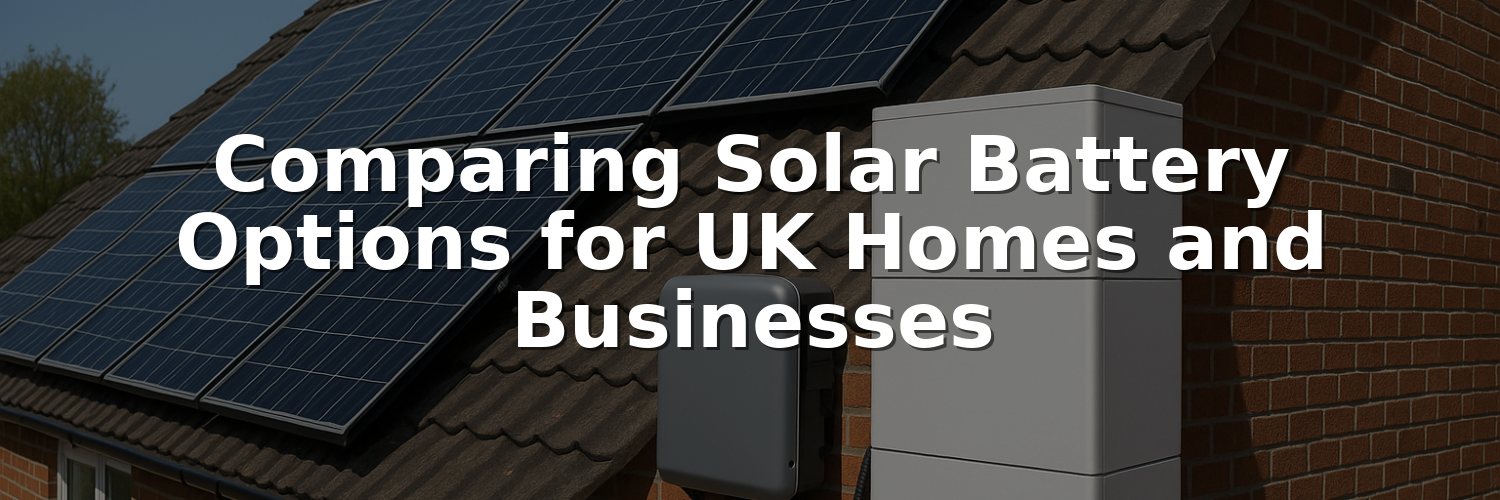
Adding battery storage to a solar PV system is one of the best ways to increase self-consumption, reduce grid reliance and improve resilience. This guide explains the main battery types and installation approaches you’ll see in the UK, with practical pros and cons for homeowners, landlords and businesses.
Why choose battery storage?
Before looking at options, it helps to be clear about the common motivations:
- Reduce energy bills by storing daytime solar for evening use.
- Energy independence and resilience during outages (depending on system design).
- Peak shaving to lower demand charges for businesses.
- Future-proofing for EV charging and smart energy management.
Battery chemistries: lithium-ion vs lead-acid
Two chemistries dominate the market. Choosing between them affects lifespan, footprint and cost-effectiveness.
Lithium-ion (Li-ion)
- Pros: higher usable capacity, longer cycle life, lighter and more compact, better round-trip efficiency.
- Cons: higher upfront cost, requires proper battery management and certified installation.
- Best for: households and businesses wanting long-term performance, compact installations, and EV-ready systems.
Lead-acid
- Pros: lower initial cost and proven technology.
- Cons: lower usable depth of discharge, shorter life, larger and heavier, more maintenance in some types.
- Best for: very cost-sensitive or legacy systems where replacement is near-term; less common for new UK installs.
System integration approaches
How a battery connects to your PV and the grid influences control, performance and cost.
Hybrid inverters
- Single unit handles PV, battery and grid connection.
- Pros: simpler installation, centralised management, good for retrofit and new builds.
- Cons: may limit flexibility if you want different battery vendors later.
AC-coupled systems
- Battery installed with its own inverter on the AC side of the existing solar inverter.
- Pros: ideal for retrofits, allows keeping an existing PV inverter, flexible vendor choice.
- Cons: slightly lower round-trip efficiency than well-specified hybrid systems.
DC-coupled systems
- Battery connects on the DC side, often sharing a PV inverter or using a dedicated hybrid arrangement.
- Pros: potentially higher efficiency in some configurations, simpler control in new systems.
- Cons: more complex to retrofit and may require inverter replacement.
Microinverters and optimisers with batteries
If your PV array uses microinverters or power optimisers, battery integration is still straightforward but needs planning:
- Microinverters pair well with AC-coupled batteries because each panel’s output is already converted to AC.
- Optimisers plus a central inverter can work with either AC- or DC-coupled batteries; check compatibility with your inverter supplier.
- Ask an installer—such as Solar Installers in UK—about the best pairing for panel-level optimisation and storage.
Sizing and usability: how much battery do you need?
Battery capacity should match your goals, not just roof space. Consider these steps:
- Review your consumption profile and when you use most energy (evening peaks need more usable storage).
- Match battery usable capacity (kWh) to the amount of solar you realistically export or store; a typical UK home may start at 5kWh usable, while businesses often need larger systems.
- Factor in inverter power rating—short bursts of high load (EV chargers, commercial equipment) may require higher inverter output or multiple units.
Performance monitoring, warranties and maintenance
Good monitoring and sensible maintenance protect performance and your investment.
- Monitoring apps and remote monitoring let you track charge cycles, state of health and export behaviour. Solar Installers in UK offers remote monitoring options as part of system design.
- Warranties vary: look at both years and cycle guarantees (e.g. X years or Y cycles). Confirm what’s covered for degradation.
- Maintenance for lithium systems is minimal but you should plan periodic checks, inverter firmware updates and climate considerations for installations in lofts or sheds.
Commercial considerations and incentives
For businesses and larger installations:
- Consider peak shaving and demand charge reduction—battery sizing and control strategy are crucial.
- DNO applications and grid connection options can add complexity; experienced installers will manage export limits and applications.
- For farms, care homes or pubs exploring storage alongside PV, specialist advice helps: see resources like farming solar and solar for pubs for sector-specific guidance.
Choosing an installer and next steps
Pick an MCS-certified installer who offers thorough roof surveys, system design and clear proposals for integration. Solar Installers in UK provides surveys, monitoring and maintenance plans to keep batteries performing well. When assessing quotes, compare:
- Battery chemistry, usable capacity and round-trip efficiency.
- Inverter type (hybrid, AC-coupled, or DC-coupled) and expansion options.
- Monitoring features, warranty terms and expected lifecycle costs.
For local advice and examples of installations, explore resources like solar energy companies or region-specific pages such as Newcastle solar panels to find installers familiar with local regulations and conditions.
With the right chemistry, integration and installer, battery storage can significantly boost the value and resilience of your solar PV system—whether for a family home, farm or commercial site.